
Taking a 10-day national park trip involves planning that goes beyond gas money and an outline of what you want to do. If you don’t plan it well, you could end up sleeping in a store parking lot because the campground was booked up 6 months ago. Good planning makes national park camping great, with saved google maps lists, spreadsheets, and a good memory to stick to booking deadlines. If you relax the rules on the travel portion, you will have a lot of fun.

The Caribbean for Less Than You Think
Up to 65% off + a resort credit + a free night at select Sandals resorts. 8 islands. 17 resorts. All-inclusive everything. See the deals →
Phase 1: The Six-Month Booking Window
For most park visitors, the most crucial aspect of planning the trip starts about six months before they leave, This is when they need to understand which federal campgrounds, lodges, and timed-entry permits operate on strict rolling release dates. Reservations through Recreation.gov open on a rolling six-month basis. To successfully plan, visitors must figure out the exact date and time that their desired park’s reservation window opens.
To secure a spot at highly sought after places, travelers need to set an alarm for 7:55 AM Eastern Time. If you miss the window by 10 minutes, you miss it altogether. To prepare, travelers need to make their government accounts, log in ahead of time, and have their payment methods saved to their profiles.
Phase 2: Routing and the Rule of Halves
When mapping driving times, we need to have a reasonable expectation for what we can accomplish within a set period of time. One mistake I see often is trying to fit in 4 major parks over 10 days. A good rule of thumb when designing your itinerary is to stick to a certain ratio.
Planners need to limit driving time each day to no more than four hours. This leaves plenty of daylight for hiking, camp set up, exploring, and other fun activities. It also prevents the trip from becoming a stressful endurance test of driving. For destinations that require eight hours of driving, planners should divide split the drive by adding an overnight stay at a state park or a budget hotel.
Estimated 10-Day Road Trip Budget
Here’s a sample budget estimation for a 10-day trip for two adults sharing a vehicle and a tent. Building a realistic budget will help to avoid surprises.
| Expense Category | Estimated Cost | Notes |
|---|---|---|
| America the Beautiful Pass | $80 | Covers entry for all federal lands for one year. |
| Campsite Reservations | $300 | Averages $30 per night for nine nights. |
| Gas | $250 | Highly variable based on vehicle MPG and route length. |
| Groceries and Ice | $400 | Assumes camp cooking for most meals. |
| Firewood and Incidentals | $70 | Firewood must be purchased locally to prevent pest spread. |
Phase 3: Daily Pacing and Digital Infrastructure
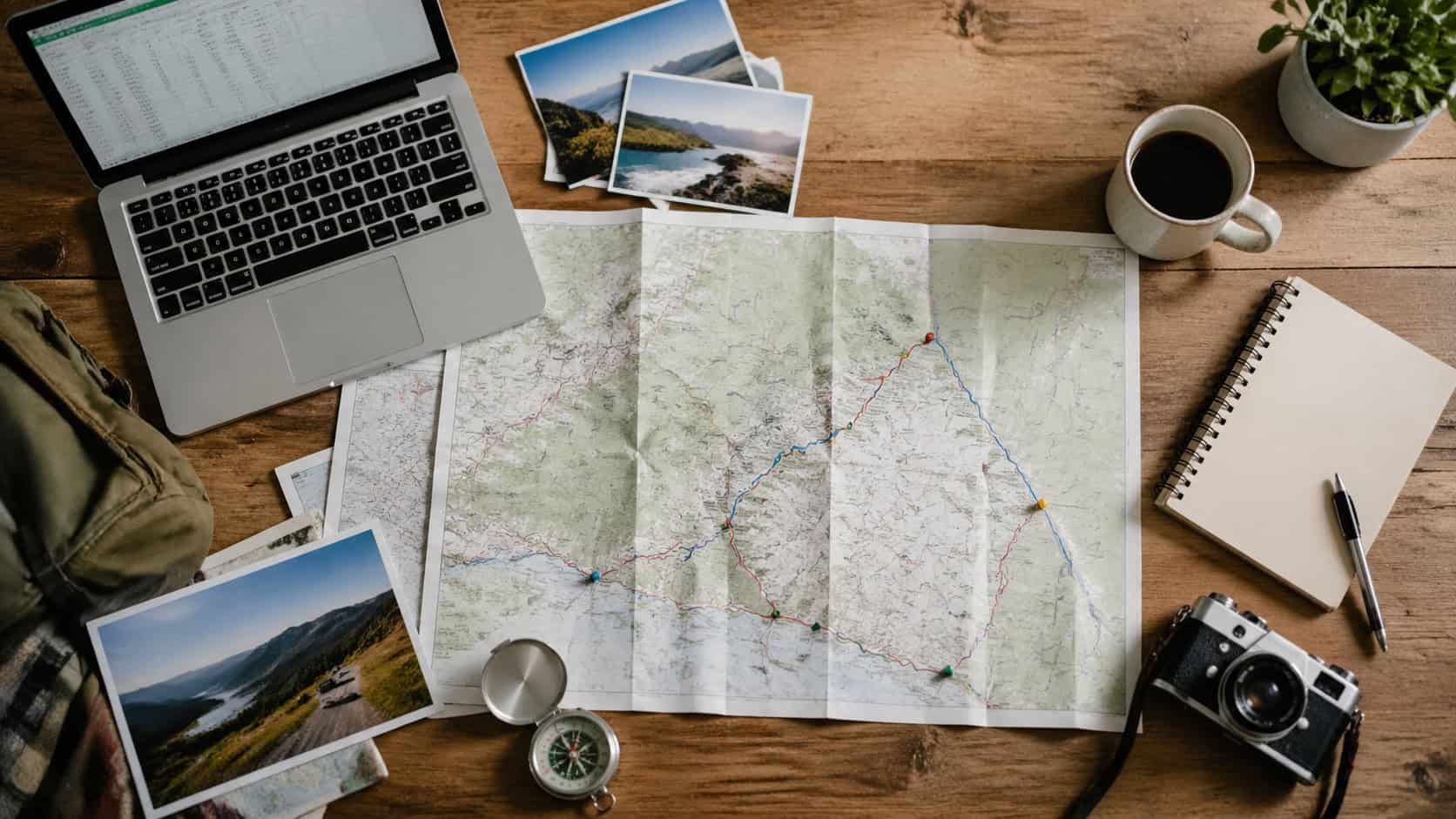
By using digital systems, the travel timetable can be maintained. It is advisable to set up a Google Maps list of locations. Also, pinning places such as the trailheads, visitor centers, and grocery stores can save a lot of unnecessary stress.
When visiting the park, there will be no cell service for most of the park. It is essential for you to download the maps for offline access as you will not have access to the internet during your visit.
Do not rely on a cellular connection at the trailhead. Planners should download the entire region on Google Maps and save PDF versions of the official park maps to their phones before leaving home.
Phase 4: The Practical Packing System
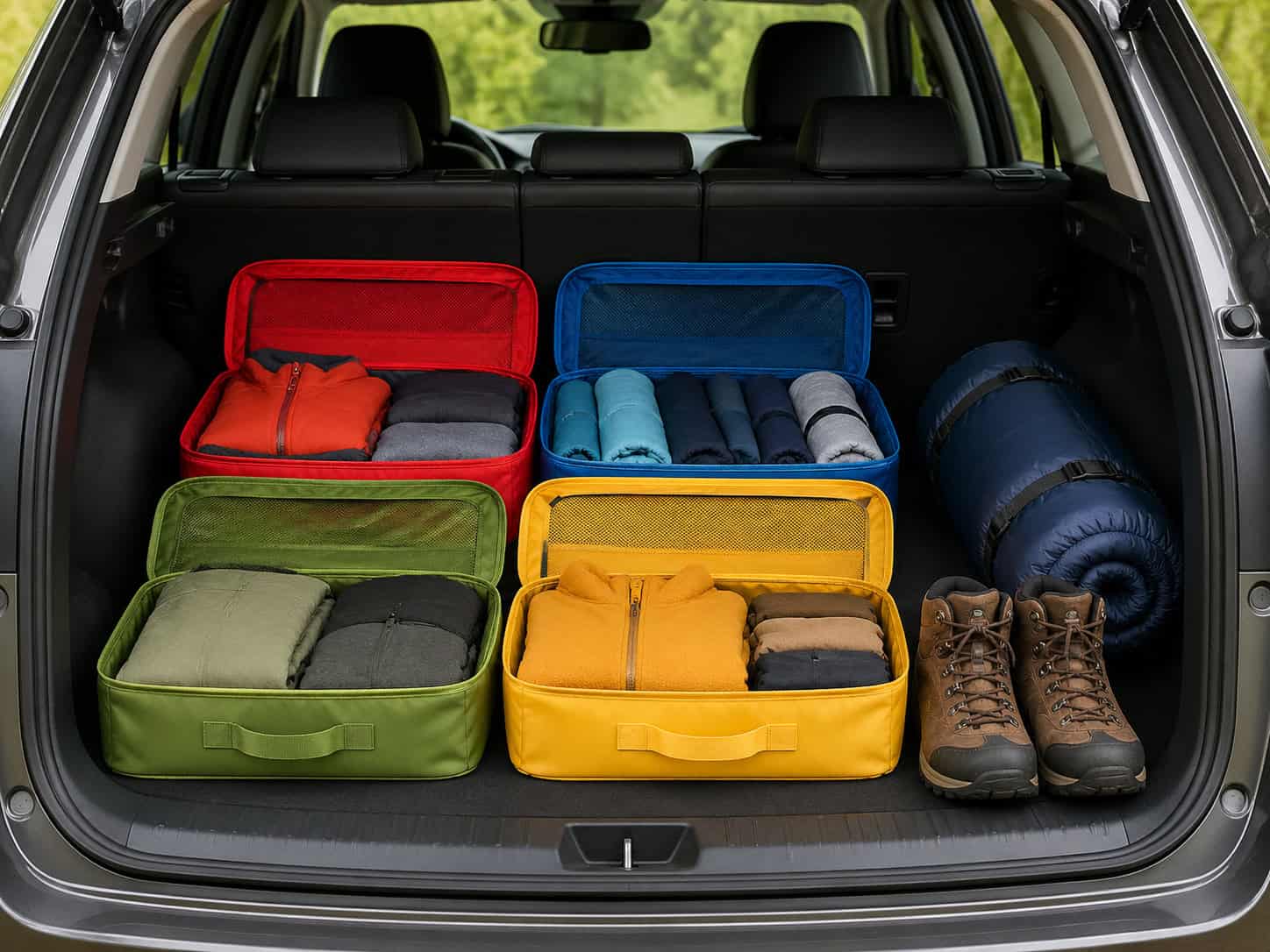
Just like with the itinerary, having an organized vehicle can be beneficial. Instead of rummaging through some enormous duffle bag with a headlamp, travelers can easily find sleepwear instead of hiking gear with color-coded packing cubes!
- Red Cubes: First aid, blister treatments, and emergency supplies.
- Blue Cubes: Base layers, socks, and hiking apparel.
- Green Cubes: Camp kitchen essentials, matches, and headlamps.
- Yellow Cubes: Sleepwear and toiletries.
Frequently Asked Questions
How far in advance should travelers book campsites?
Most federal campgrounds can be booked exactly six months in advance. Popular sites can be reserved in a matter of minutes.
Are timed-entry permits required for all parks?
No. Although reserved tickets are not required at some parks, they are at the Arches, Glacier, and Rocky Mountain National Parks. During peak season, planners are advised to visit the specific park website for the most up-to-date information on requirements.
Is an annual pass worth the cost?
Correct. An $80 America the Beautiful pass pays for itself when a vehicle enters three or more national parks within a year.